
Start with the responsibility
Build learning around payment approvals, employee records, access requests, and the decisions your teams own.
Finance, HR, and IT each face decisions a single general course cannot prepare them for. AwareX connects role-specific lessons to the checks each team needs.
Explore the approach See AwareX in Action - Book a demoOne course can leave finance, HR, and IT decisions unrehearsed. AwareX connects role-specific lessons to the checks each team needs.
A supplier changes bank details. Verify through the contact already on file before changing the payment record.
Fictional workplace example, not a live attack or measured customer result.
Generic advice does not explain the approval, identity, or information checks each role must perform.
An unverified bank change, payroll update, or account reset can put money, personal data, or access at risk.
AwareX connects role-relevant examples, simulation cues, and follow-up learning, with assignment and reporting scope confirmed in your demo.
Compliance learning establishes a foundation. AwareX puts AI behind the next step: it reads each response and shapes what the learner sees next.
| What matters | Routine compliance training | AwareX approach |
|---|---|---|
| Starting point | A scheduled course built around policies and general awareness. | AI studies your approved business context first, so the first test reflects how you work. |
| Workplace relevance | The same broad examples for every responsibility. | AI drafts role-specific versions for finance, HR, IT, and leadership; your team approves each. |
| What people practice | Recognizing terms and selecting answers in a lesson. | AI adjusts the example, the lesson, and the next scenario to each response. |
| Follow-through | Completion often becomes the finish line; reinforcement is rarely built in. | AI flags the cue behind each answer and refreshes the content your team approves before it repeats. |
| What success means | Attendance, course completion, and assessment scores. | Completion records plus AI evidence the safer decision holds in a fresh scenario. |
This compares a completion-focused training approach, not every training provider. AI output is reviewed by your team before release, and capabilities and scope are confirmed in your demo. Training does not guarantee attack prevention, compliance, or certification.
Can each team apply its own verification process when the request is urgent?
Rehearse the decisionExplain the missed cuePractice again
A course can be relevant to security and still feel irrelevant to someone’s job. AwareX connects the lesson to the responsibility, so people can recognize the moment when it matters.
One course for everyone misses the risks that come with each role.
Build learning around payment approvals, employee records, access requests, and the decisions your teams own.
Use the simulation response to discuss the exact verification step, rather than repeat a generic warning.
Follow learning with another relevant example. Discuss assignment rules and progress tracking in your demo.
A supplier changes bank details. Verify through the contact already on file before changing the payment record.
Confirm content formats, assignment options, and reporting scope with your team in a demo.
Each response is read as a signal, not filed away as a score. The AI engine moves each person one step up or down seven difficulty levels, so nobody meets a deepfake call before they can spot a fake invoice, and nobody stays on obvious spam that teaches them nothing.
The next test moves a step up the ramp: a more familiar sender, a tighter story, or a second channel arriving behind the first.
The level holds. The lesson names the exact cue that was missed, and that cue returns in the next wave until it is recognized on sight.
Coaching comes first, not embarrassment. The next test keeps the same theme with clearer warning signs, then rises again once the habit holds.
Adjustments belong to the person, not the whole company. Your team still reviews and approves every wave before it runs.
Why it matters: a result only means something when you know how hard the test was.
Role-Based Training, rehearsed through the decisions around a marketing offsite and a campaign plan.
The lesson follows a finance decision.
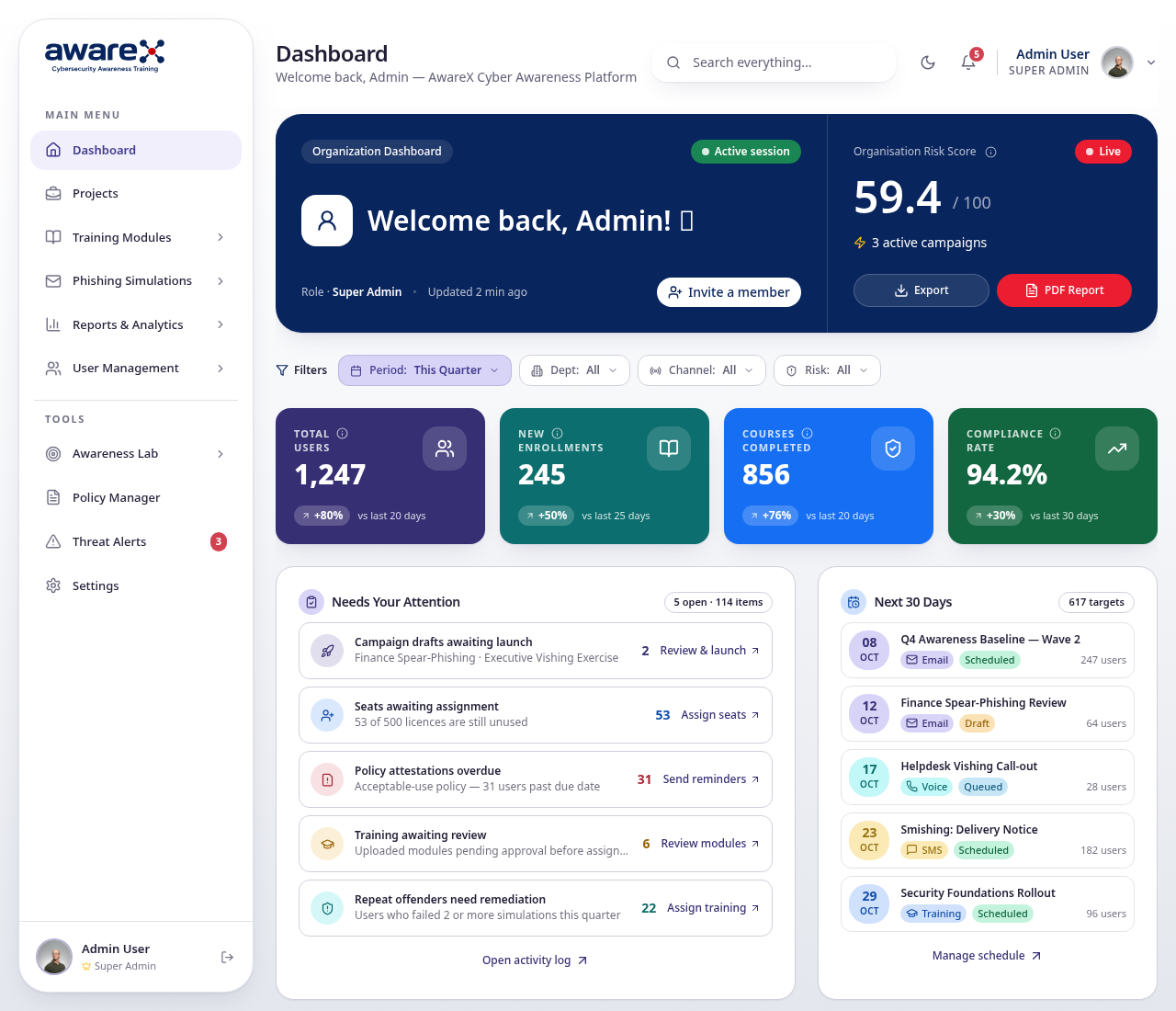
Illustrative screens, not live product screenshots. Messages, identities, and destinations are fictional; no links, payments, approvals, or uploads are active. Confirm capabilities in a demo.
A finance employee and a service-desk analyst do not use the same exit route through a risky request. Rehearse the checks each role needs, explain a missed step, and practice again.
Explore the fire-drill approachCaptured platform preview. Figures are example data, not measured customer results.
A signed policy fades within weeks. A rehearsed pause, verify, and report habit holds when a real message lands.
Short, contextual exercises arrive in the flow of work, in the channels your teams actually use, instead of a once-a-year course.
A miss is data for the next exercise, not a mark against a person. Repeated practice is what moves the numbers.
Explore how responsibilities, simulation responses, and learning priorities can come together in your program.
Use the form above to preview a request. Demo booking is not connected; details are not sent or saved.
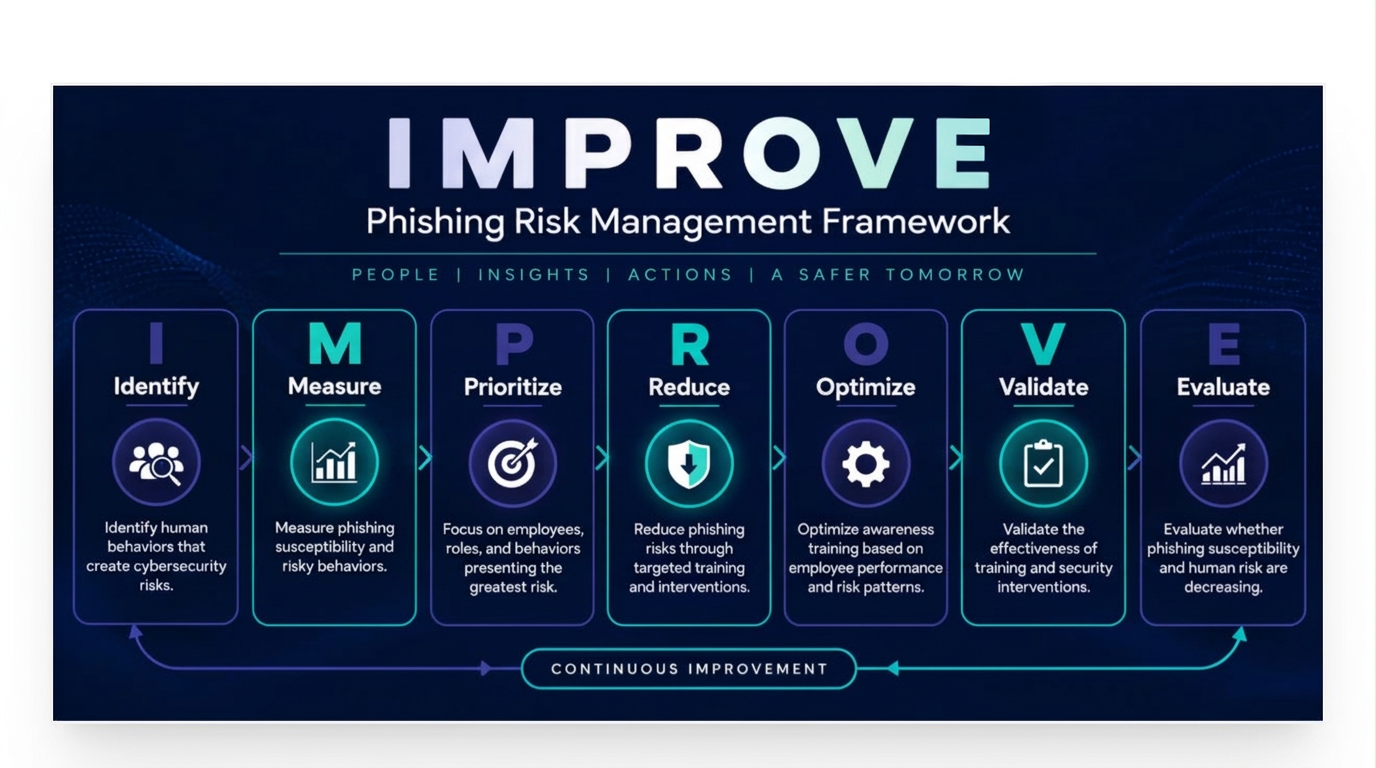
Identify, Measure, Prioritize, Reduce, Optimize, Validate, and Evaluate. AI connects business context, employee responses, and targeted learning to inform each next test.
Role-based cybersecurity awareness training matches learning to employees’ responsibilities and the decisions they make. Finance may rehearse payment changes, HR may review candidate documents, and marketing may practice checking information-sharing requests.
A common foundation is useful, but different roles face different requests and approval responsibilities. Role-relevant examples help employees apply policies to their actual work rather than only recall generic security advice.
AwareX connects learning to workplace responsibilities and the decisions rehearsed in simulations. AI-assisted materials remain subject to team review. Discuss audience mapping, assignment options, and reporting scope in a demo before planning your program.
Teams handling payments, personal information, access approvals, or sensitive documents benefit from examples aligned to those duties. Executives, finance, HR, IT, and customer-facing teams may need different scenarios even when they share the same core security policies.
A response can reveal which decision needs reinforcement, such as verifying a supplier change or using an approved workspace. Use that evidence to select relevant coaching and lessons. Confirm how those assignments are supported in your AwareX demo.
Review assessment understanding and subsequent workplace decisions alongside completion records. Compare progress within relevant roles and identify repeated gaps. Completing a course alone does not establish that an employee can apply the policy under pressure.