

Software you did not request
An email, browser pop-up or document asks you to install an unfamiliar application.
Meet AwareX: contextual email testing and coaching that helps people question unexpected attachments and report suspicious requests.
Where we test
Ransomware can encrypt files, interrupt operations and be accompanied by data theft or extortion. Deceptive messages and malicious downloads are some possible entry points, alongside technical weaknesses and stolen access.
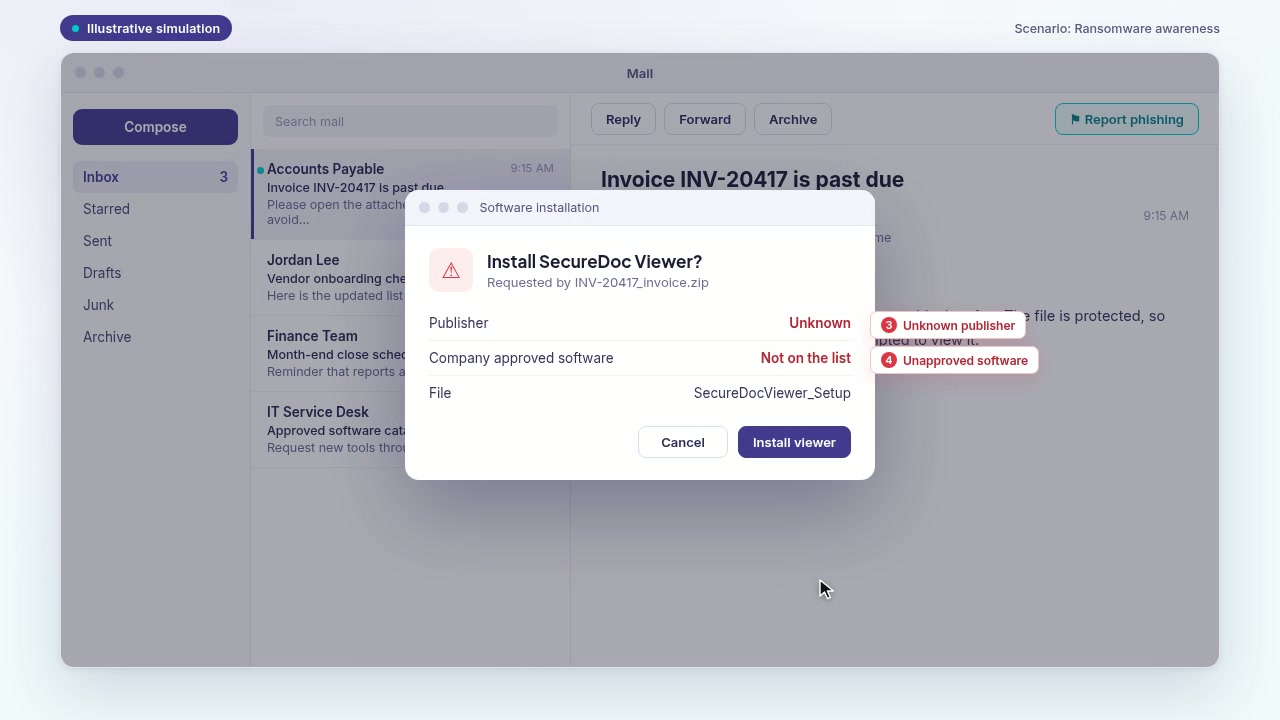
A message asks an employee to download an updated invoice viewer. The request looks like a normal supplier task, but the software is unexpected and has not been approved by the organization.
An email, browser pop-up or document asks you to install an unfamiliar application.
A request asks you to disable protection or bypass an approval to finish a task.
A file asks for unusual permissions or additional downloads unrelated to the task.
Do not install unexpected software or bypass security controls.
Verify files and download requests through approved business processes.
Report suspected compromise promptly and follow your incident-response instructions.
AwareX helps teams practice decisions around deceptive emails and unexpected requests. Relevant simulations and timely coaching complement technical protection, backups and incident-response planning.
Awareness training does not guarantee ransomware prevention. This is human-risk learning, not live malware deployment or a ransomware-detection service.
No. Training is one layer. Organizations also need appropriate technical controls, tested recovery plans and a clear incident-response process.
The form is available to preview, but delivery is not yet connected. Submitting it does not send or save your details.